
The Domino Effect: Small Actions, Big Results
The Domino Effect: Small Actions, Big Results
Imagine a single domino. Now imagine each subsequent domino 1.5 times the size of the one before it. By the 26th domino, the chain could—at least in theory—bring down a skyscraper. That startling thought is not simply a parlor trick. It is a vivid metaphor for how tiny, steady choices can create exponential change over time.
Why small things matter more than we think
It’s easy to admire the finished product—the championship ring, the bestseller, the thriving ministry, the restored relationship. These are the skyscrapers of life. But behind each one are hundreds, thousands, or tens of thousands of tiny decisions: showing up to practice, offering a quiet prayer, saying “I’m sorry,” reading a single page of Scripture, choosing to forgive.
The physics of a domino chain captures that truth: small inputs can build momentum and, given time and wise arrangement, produce powerful outputs. The same principle operates spiritually. What looks insignificant in isolation—an ordinary prayer, a humble act of hospitality, a brief moment of repentance—can become the seed for a much larger harvest if we keep planting.
Faith is trust, not reckless risk
When most people hear the word faith, they picture a blind leap—jumping from a plane without a parachute. But biblical faith is less about recklessness and more about trust. It is placing confidence in Someone whose perspective spans every moment of history, Someone who knows far more than we do.
Trust grows. When we practice trusting God in small things, we build a reservoir of confidence for the heavy moments: bad diagnoses, financial strain, painful relationship seasons. That reservoir is rarely built overnight. It’s built one reliable choice at a time.
Seeing through our limited timescale
We live moment-to-moment. Calendars and to-do lists train us to think in short bursts: day, week, month. That narrow horizon makes it hard to recognize God’s wider work. Unlike us, God is not confined to linear time. He is present across every era, and that means his plans can unfold on timelines we might call slow, patient, or even invisible.
Remember: a wise investor doesn’t judge an orchard on the morning the sapling is planted. The key question is not how quickly you see fruit but whether you continue planting consistently.
Perseverance: the habit that multiplies
If there is a single word that undergirds steady spiritual growth, it is perseverance. Perseverance plus patience equals the compound interest of faith. A few realities make this hard for us:
- We prefer instant results. The microwave culture hates the crockpot approach.
- We celebrate overnight success stories without learning about the years of incremental work behind them.
- We get discouraged after the first few setbacks and stop the process before the chain reaction can really form.
As Paul encouraged the Galatian church:
“Let us not become weary in doing good. At the proper time we will reap a harvest if we do not give up.”
That promise depends on continued practice. If you stop too soon, you may miss what God was arranging behind the scenes.
Real-life detours and learning from failure
Growth rarely follows a tidy upward line. Failures, missteps, and entrepreneurial flops are part of the path. Those experiences are not pointless; they are formative. Whether it’s a failed business venture, a fitness attempt that ended in discouragement, or a series of relational mistakes, failure teaches humility and redirects our perseverance toward wiser patterns.
The temptation is to label the beginning of effort as “too small” or “too silly.” Instead, give space for small, steady steps—and be willing to learn from setbacks.
Plant seeds, don’t measure only the harvest
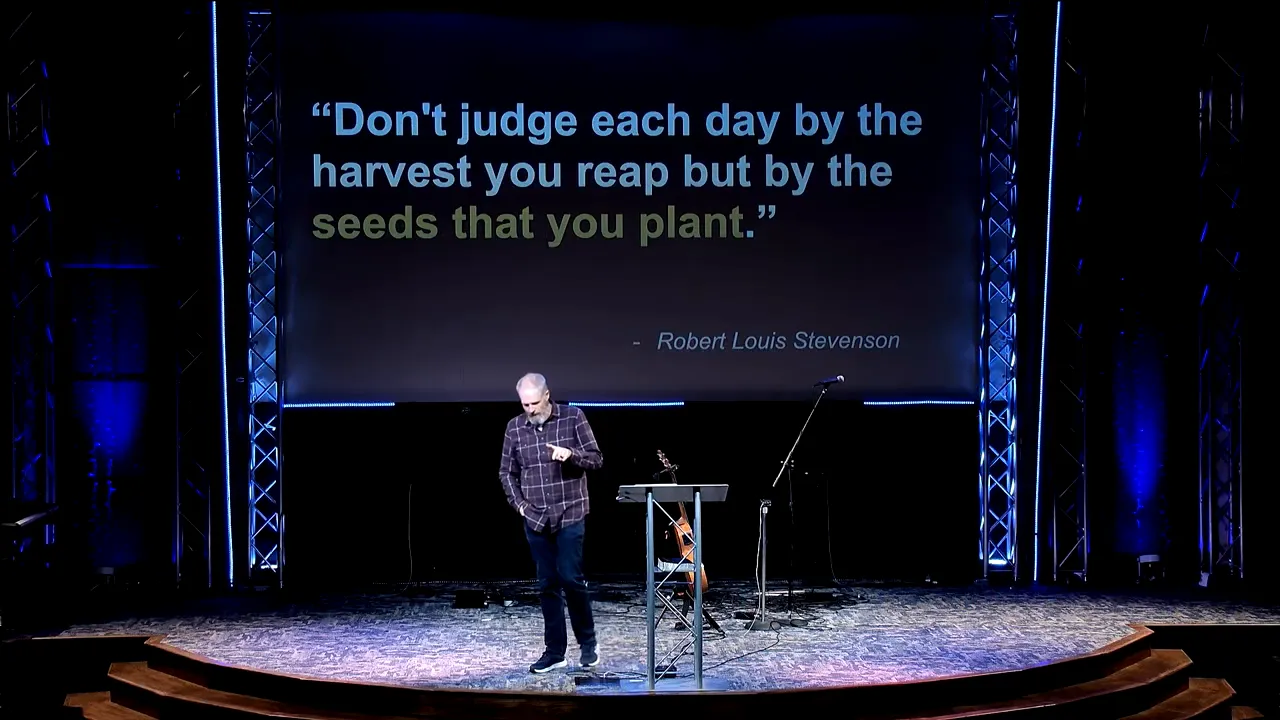
Stevenson put it well: don’t judge each day by the harvest you reap but by the seeds you plant. That shift in perspective is crucial. Think long-term. Invest like someone who expects to pass the fruits of their efforts to future generations.
Historically, certain families and institutions have taken this approach literally, refusing to invest in projects that won’t outlast a century. While most of us won’t plan on that timescale, the principle still applies: consider the lasting value of the choices you make today.
The caterpillar’s promise: transformation takes time
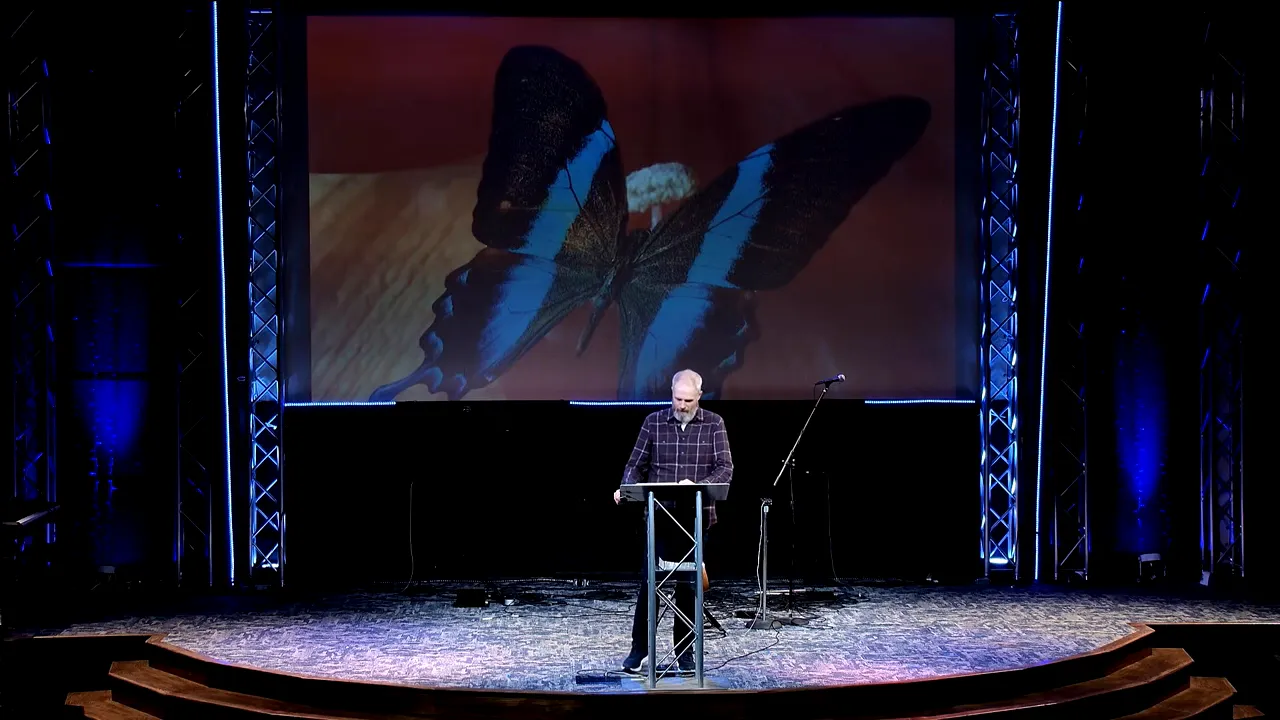
Nature gives one of the clearest metaphors for this pattern: the caterpillar. It inches along, barely noticed, then retreats into a cocoon, and later emerges as something that can soar.
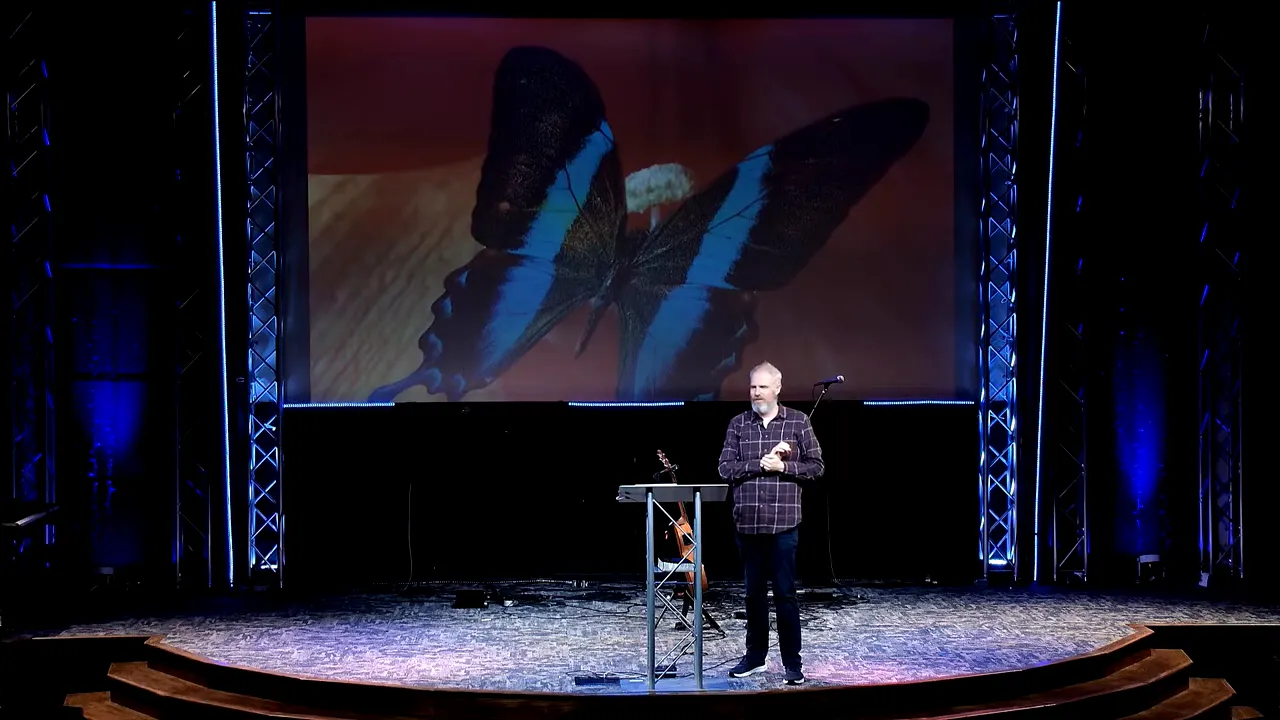
That transformation is not instant. It is mysterious and slow and sometimes invisible. Similarly, spiritual growth often happens beneath the surface. The work God does in us can look unimpressive day-to-day, but given time it produces a beautiful, unexpected result.
Trusting God means embracing both the Gospel and the process
Fundamental to all of this is the claim that Jesus is who he says he is: the Son of God who lived, died, and rose again. That is the anchor of trust. Salvation—freely offered—is not earned by effort; it is received by faith. Yet once trust is placed in Christ, the Christian life becomes a pattern of steady growth, not a one-time upgrade.
The invitation to trust is incredibly simple to take, but profoundly life-changing. A small, sincere affirmation—“Jesus, I trust you”—is the start of a kingdom chain reaction. It is a tiny action that changes everything.
Practical practices that compound
What does it look like to live intentionally in small steps? Below are practical, repeatable practices—bite-sized habits that create spiritual momentum when practiced consistently.
Daily habits (pick one or two to start)
- Short daily prayer—one to five minutes of genuine conversation with God.
- Scripture bite—read one verse or a short passage and reflect on one application.
- Simple acts of kindness—hold a door, offer a sincere compliment, send an encouraging text.
- A brief moment of silence—practice listening rather than solving.
Weekly rhythms
- Worship and community—gather with others to remind your heart of God’s story.
- One-anothers experiment—choose one of the biblical “one another” commands to practice each week (honor one another, forgive one another, welcome one another, show hospitality).
- Service—serve in a small, regular way—ten minutes each week adds up.
Mindset shifts to adopt
- Measure seeds, not harvests—celebrate daily faithfulness rather than only outcomes.
- Expect setbacks—failure is part of the process and a teacher, not disqualification.
- Trust the long view—choose actions that matter decades from now, not just today.
One-anothers: small practices with big ripple effects
The New Testament is full of relational commands addressed to the community: love one another, forgive one another, bear one another’s burdens, encourage one another. These are practical, everyday ways to live like Jesus—and each one is intentionally small, doable by anyone.
Choose two "one-anothers" for the week and practice them intentionally. Track them in a simple habit app or a notebook. The long-term result? A community that bears witness to a different way of living—a domino chain of grace and transformed relationships.
When progress feels invisible
The hardest part is often the waiting. When months pass with no visible change, when prayers seem unanswered, it is tempting to adopt a different narrative: that God is distant, indifferent, or ineffective. The biblical response reminds us otherwise: God is at work even when we cannot see it.
Trust is not naive ignoring. It is a sustained commitment to believe in the goodness and wisdom of a God whose perspective transcends our own. It chooses to plant seeds even when the soil shows no immediate fruit.
A simple weekly plan to start
- Monday: Spend five minutes in prayer and read one verse.
- Wednesday: Do one small act of kindness intentionally for someone you encounter.
- Friday: Choose one “one-another” to practice over the weekend (welcome, honor, forgive).
- Sunday: Join a community gathering—sit with your notebook and jot one thing you saw God doing this week.
Small, consistent steps like these build trust muscle in the long run. They form the backbone of perseverance.
The invitation: take the baby step today
If you’ve never made a commitment to follow Jesus, a small step is all that’s required: a simple, honest “yes.” If you already follow Jesus but have grown weary or distracted, come back to the small practices that formed you in the first place. Replant seeds. Be patient. Refuse to despise small beginnings.
Final encouragement
The domino effect is both a warning and a promise. Small things can cause great harm, but the same pattern is the pathway to renewal. One humble prayer, one sincere apology, one act of generosity, one moment of consistent Scripture reading—they add up. They compound. They create a chain reaction that, in time, reshapes families, communities, and generations.
Keep planting seeds. Practice trust in the everyday. Persevere when results are slow. And remember: the Creator who sees all moments is working in ways you cannot yet see. Your faithful small steps matter far more than you know.
Suggested reflection questions
- What small habit can you commit to this week that would reflect trust in God?
- Which “one-another” command could you practice intentionally for the next seven days?
- When have you seen a small choice produce an outsized result in your life?
Plant seeds today. Trust the timing. Let God do the multiplication.