
Easter and the End of Darkness: What Resurrection Changes
There is a kind of darkness you can only understand if you have lived it.
One night, out in the country, power went out. The porch light was all that was left, and then even that disappeared. With rural America, “dark” is not just the absence of light. It is the absence of escape. There is no other source to help your brain settle. You cannot even see your hand in front of your face.
At first, I tried to act normal. My dog and I were outside, bugs buzzing everywhere, mosquitoes biting, the usual night sounds. Then the house went fully dark. And after a little anxiety crept in, something else joined it: silence. Not the peaceful kind. The kind that makes you start wondering what might be coming next.
That is when fear has a way of moving from “what if” to “what is.”
And if that feels personal, it makes sense. Because the disciples were there too. They were afraid. They were also wondering whether everything they had done, everything they had built their lives upon, might have been false. They were living in the kind of darkness where you cannot see the path ahead.
That is where Easter speaks.
Because Easter is not primarily a sentiment. It is a decision-point about whether darkness has an end.
Why Easter Forces a Choice
In life, we often try to stay in the middle. We want to keep a foot in both worlds. But Easter challenges that posture.
Here is the fork in the road:
- If the resurrection is true, it changes everything.
- If it is not true, then we are still in darkness with no real light breaking through.
That matters even more when the world feels shaken. Lately, it is easy to feel like confidence is being worn down from every direction: governments, health, finances, relationships, and faith. Everything feels chaotic. The news is full of trauma, abuse, war, violence, and relationships breaking apart. Even if you do not read the headlines, you can feel the strain in the air.
So the question becomes simple and weighty: Is Jesus enough?
The Apostle Paul addressed the same issue with no sugarcoating. If Christ has not been raised, then everything collapses. All the preaching is useless, and faith is useless. That is not a casual claim. Paul is basically saying: “Either the resurrection is real, or it is not.” There is no safe middle where it does not matter.
That is what gives resurrection its power as good news. Either it happened and Jesus is who He claimed to be, with authority over life and death, or it did not, and then we are left with darkness that never truly gets challenged.
The New Dawn: Resurrection Happens at the Start of a Day
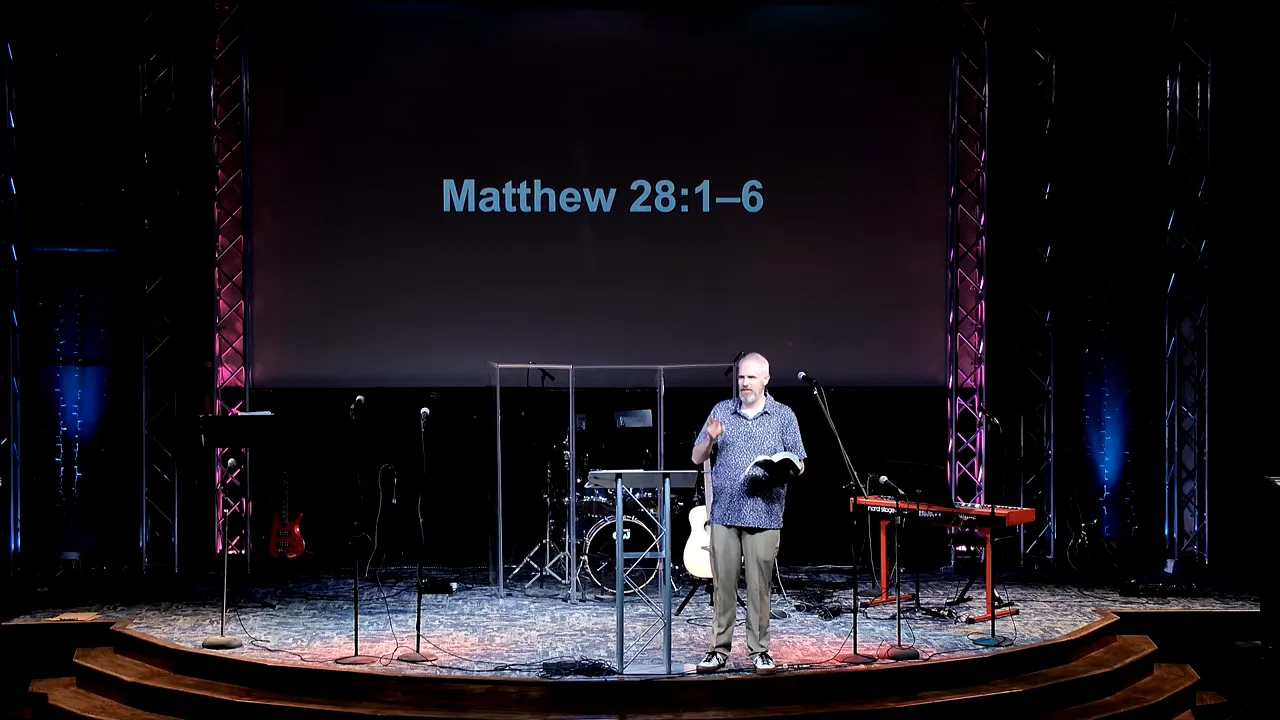
Matthew 28 gives us a scene early Sunday morning. “As the new day was dawning,” Mary Magdalene and the other Mary went to visit the tomb.
That detail is not random. In Scripture, new beginnings often arrive like a sunrise. The timing matters. The resurrection is recorded as happening when the new day begins, when the world is shifting from night into morning, from hiding into light.
There is a consistent theme across the Bible: weeping may last through the night, but joy comes with the morning. The resurrection fits that pattern. It signals that God is not just fixing a moment, but launching something new.
And then Matthew adds an image so intense that it is hard to move past it quickly: a great earthquake.
Matthew’s Greek word for “earthquake” is used only a few times in his Gospel. It is used when Jesus enters Jerusalem and when Jesus is crucified. Now it appears again, meaning this moment is not quiet or private. It is earth-shaking. It is God doing something in the middle of history that cannot be shrugged off.
An Angel With Lightning-Face and White Clothes
Matthew 28 continues: an angel of the Lord comes down from heaven, rolls the stone aside, and sits on it. His face shines like lightning. His clothing is white as snow.
And the guards, representing the power of the empire, shake with fear and fall into a dead faint.
Think about the symbolic weight here. A stone was placed at the tomb. It took multiple men to move it. It was also a public statement: “Jesus is dead. The empire has controlled the outcome.”
Then the angel does the opposite with a kind of authority that makes the empire look small. He rolls the stone away like it is nothing, and he sits on it, almost as if to show again and again that what people thought was powerful could not actually defeat God.
One striking note that some scholars make is the idea that the angel is sitting on the stone he just moved. The point is not subtle. The message is: the tomb is not a victory for the empire. It is a temporary scene in a much larger story.
“Do Not Be Afraid”: The Resurrection Is Not a Guess
The angel speaks to the women because he knows they are afraid. The message is direct: “Do not be afraid.” Then he names exactly what they were looking for.
They were seeking Jesus who had been crucified. But He is not there. He is risen, just as He said would happen. The angel even invites them to see where the body was lying.
That detail matters because after the resurrection, people have tried to explain it away. If it is true, it changes everything about the world. So theories arise. “Maybe it was stolen.” “Maybe it was a mistake.” “Maybe it was something else.”
But Matthew’s account makes a strong point: His body was not stolen. The resurrection was not a fake. The story is not “Jesus kind of survived” or “everyone misunderstood.” It is: Christ is risen.
And the angel’s repeated “do not be afraid” lands differently when you realize what the fear is actually about. Fear is not just “What if something goes wrong?” It is “What if death is the final word?” It is “What if God’s promises were false?”
Resurrection attacks that fear at its root.
From Burial to Planting: What Looks Like the End Becomes New Life
Jesus had tried to prepare His disciples for this. He taught that unless a grain of wheat falls into the ground and dies, it remains alone. But if it dies, it produces a harvest.
That is the way God often works: what looks like loss becomes the beginning of fruitfulness. What appears to be the final chapter becomes the seedbed of a new one.
John 1 adds that the light shines in the darkness, and the darkness cannot extinguish it.
That matters because darkness is not only an external condition. Darkness shows up inside us too. We can carry doubt, shame, regret, fear, and grief. We can feel like the best days are behind us. We can sense that the future is unsafe.
Resurrection does not deny those realities. It announces that darkness does not get the final authority.
What Resurrection Means for Real Life: A Personal Weight
This Easter carries extra weight for many people because life does not wait. For the speaker, the month leading up to this message included a painful closeness to death: a father’s death.
When something like that comes near, resurrection stops being abstract. It becomes urgent.
And the message changes from “this is comforting” to “this is the only kind of hope that can survive pain.”
Because resurrection is not just a nice belief for Sundays. It is a claim about victory. And it is a claim that victory is transferred to people who trust Christ.
Colossians says that believers are rescued from the kingdom of darkness and transferred into the kingdom of God’s Son.
Notice what is in the past tense. The point is not that you might eventually escape darkness if you work hard enough. The point is that Jesus has already won, rescued, and transferred. That is “done” language, not “try harder” language.
Saved by Grace, Not Programmed Like Robots
There is a temptation when we talk about grace to turn it into control. “God has rescued you, so now you must do everything the right way.”
But the message here is that God does not push people around. He invites.
The Bible presents a God who rescues and gives choices. Not an AI that forces behavior, but a King who offers a path and asks for trust.
We know this because we are human. We make good choices. We make bad ones. We have thoughts we wish we did not have. We have moments we regret. And the problem is not just that we mess up. The deeper problem is that we cannot reliably pull ourselves out of darkness on our own.
That is why “rescue” matters. Rescue means someone else acted.
It is like the old “Choose Your Own Adventure” books. You had decisions. Your choices mattered. Sometimes you made one and got punished immediately. But you could go back and change course. The whole point was that you were not trapped with no agency. You could respond.
In spiritual terms, the invitation is similar: you are not locked into one route. But the stakes are higher than a silly goblin. The stakes are whether darkness gets to be the final storyline.
The Invitation: Three Paths for Easter Response
The message ends with something practical. It does not just say, “Resurrection is awesome.” It presses toward transformation.
Easter can be easy to celebrate and hard to live. So the response is framed as a real next step, the kind you can practice tomorrow, next week, and beyond.
1) Love God
Love God is not only an emotion. It is a direction. It includes worship, being part of a community, and seeking God intentionally.
If you want concrete starting points, the message references:
- Worship gatherings
- A class about why Christians believe in the resurrection
- Ways to connect through dinners and community events
There is also an invitation to learn about Jesus through a simple seven-day email course designed for people who are curious but not yet sure what they believe.
2) Do Good
“Do good” is faith put into action. If faith is real, it will show up in tangible ways. That can mean serving in a homeless ministry, feeding hungry people, or contributing to work that helps others.
The message emphasizes not just internal change but external impact. You can love God and still help your neighbors. In fact, love tends to produce it.
3) Repeat
This is the part many people forget. Spiritual growth is not a one-time event. You do not eat one meal and then claim you are full for life.
You do not brush your teeth one time as a child and say, “Done.”
Practices are how growth becomes real. “Repeat” means building rhythms that keep you alive spiritually.
Without repetition, you starve.
Jesus Lights the Way in a Dark World
At the center of all of this is a claim: Jesus is not merely offering information about darkness. He is offering light that changes what happens next.
The speaker makes a powerful illustration using a flashlight. When a father turned on the light, he did not just throw it into darkness and leave the kid stranded. He showed the way on the stairs, guiding safely home.
That is the core of Christianity as described here: Jesus lights the path home.
And following Him is called to be practical and messy. People have mixed lives. Good and bad can exist together. We can be stubborn. We can think we know better. So following Jesus takes practice.
Like building any skill, becoming more like Jesus requires repeated steps. Habits shape who we become. Daily small things add up.
“I’m the Resurrection and the Life”: A Win Over Fear
The message returns to Jesus’ own words. In John 11, Jesus says He is the resurrection and the life, and anyone who believes in Him will live even after dying.
That is not only a promise for the future. It directly addresses fear right now. If Jesus truly has authority over death, then death does not get to rule the present.
And there is another key contrast in the teaching: many religions ask people to do things to reach a destination. The claim here is that Jesus did the heavy lifting. He suffered. He did the work. He invites people to share in what He has won.
So darkness does not get the last word.
Resurrection Is the Beginning of God’s New Project
One final insight offered through N.T. Wright is worth holding onto: the resurrection is the beginning of God’s new project.
It does not just mean rescuing people away from earth. It means bringing the life of heaven into earth, so that the kingdom comes in a real way. That is connected to the prayer “Your kingdom come, your will be done on earth as it is in heaven.”
In other words, resurrection is not a detour out of reality. It is the start of God’s plan to reclaim reality from darkness.
Conclusion: What If Darkness Isn’t the End?
If you have ever felt the kind of darkness that makes you anxious, you already understand why resurrection matters.
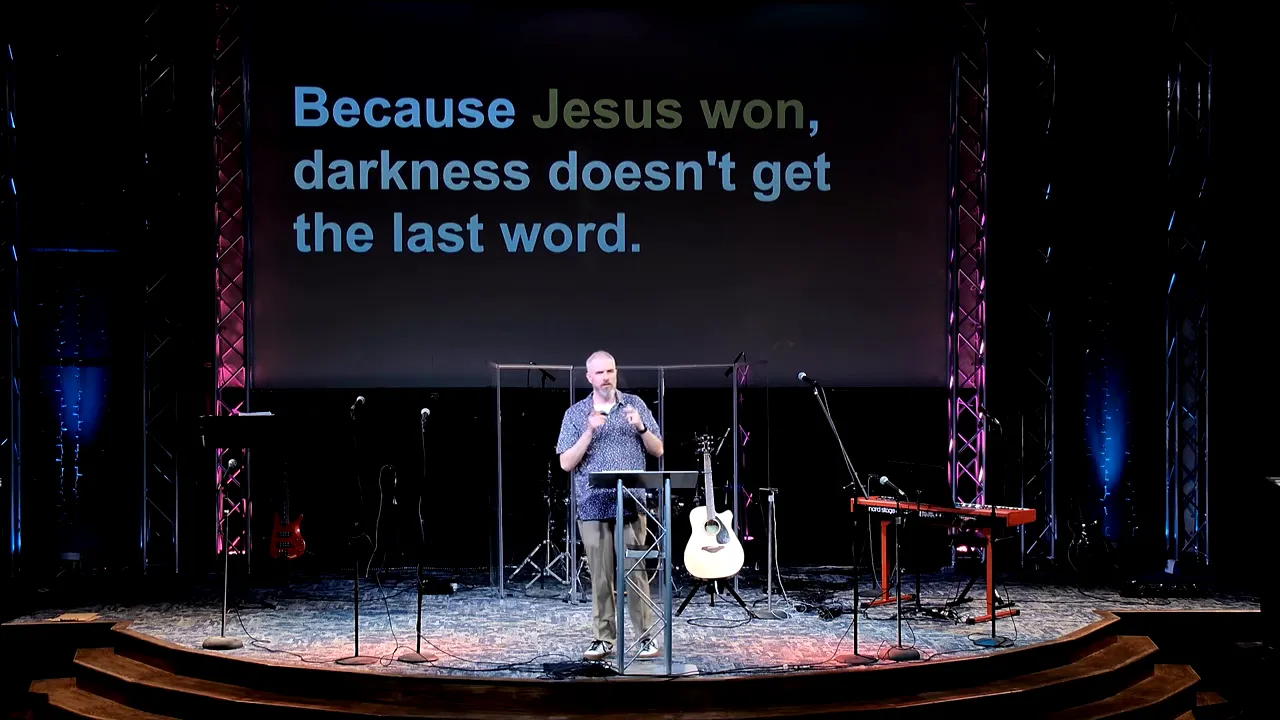
Easter is the announcement that the new day has arrived. Light shines in darkness. Darkness cannot extinguish it. The tomb is not the final authority.
So the question you are left with is not merely “Is resurrection a belief I can agree with?” It is “What will I do with it?”
Will you trust Jesus’ victory? Will you love God, do good, and repeat those practices until resurrection becomes part of who you are?
Because Easter is not just about something that happened long ago. It is about the end of darkness and the start of a new history.
Suggested Next Steps
- Choose the on-ramp: say yes to Jesus and trust that His victory is for you.
- Begin a daily practice: love God through worship, learning, and connection.
- Put faith into action: do good through serving or helping someone in need.
- Repeat: build small habits that keep you moving toward the light.
If God has started to stir something inside you, pay attention. Resurrection is not a distant idea. It is light breaking through where darkness used to feel permanent.
Turning Darkness into Peace (A Practical Next Step)
If Easter is the end of darkness and the start of a new day, it also gives you a way forward when emotions feel stuck—especially anger. Sometimes “darkness” inside doesn’t look like fear or grief; it looks like resentment that keeps replaying in your mind. If that’s you, consider starting with forgiveness as a first step toward inner peace.
Forgiveness isn’t pretending nothing happened. It’s choosing healing over the same old path, letting Christ’s light change what you do next. In the same way resurrection turns loss into life, you can move from anger toward grace through small, repeatable practices—day by day, with God’s help.