
Beyond Loss: Embracing Hope in the Promise of Jesus
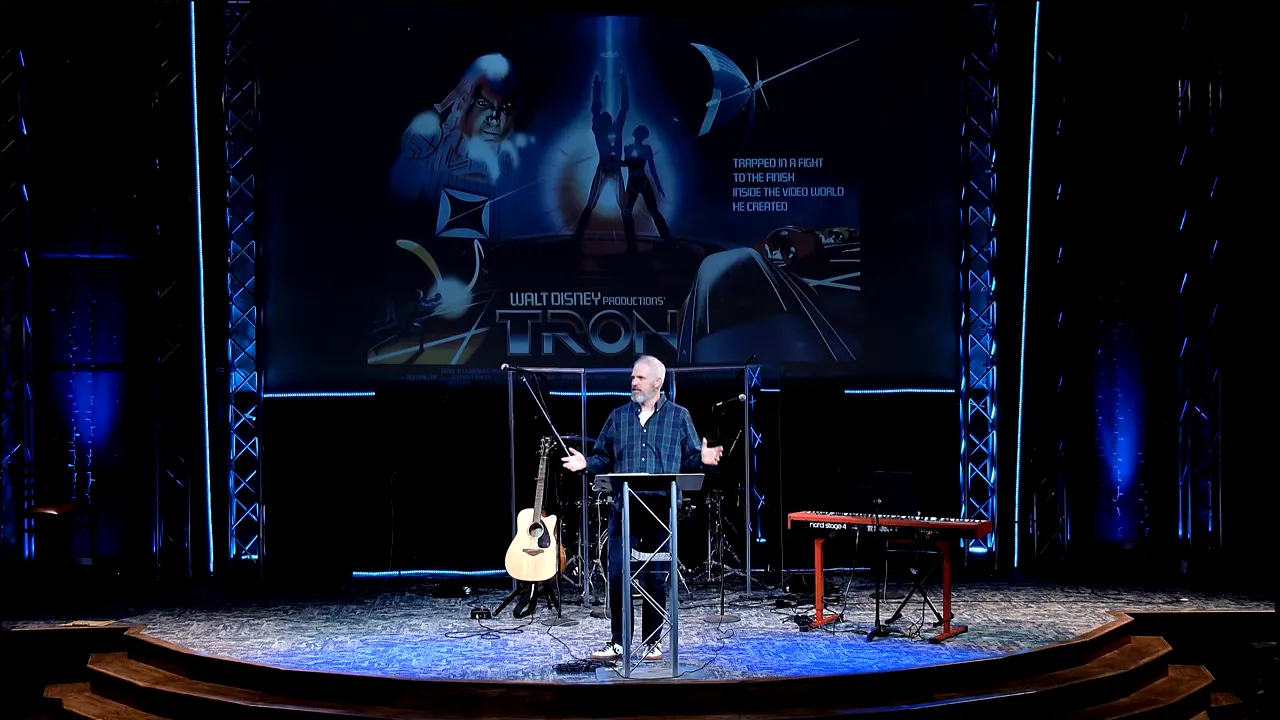
There are certain stories that stick with you for years, sometimes for decades. For me, one of those stories has always been Tron.
The original movie came out in 1982, and for whatever reason, it sparked something in me when I was young. The Tron series has never exactly been showered with awards or become the most universally celebrated Disney franchise. It has been spread out over decades, a little odd, a little niche, and yet I have loved it more than almost any other Disney property.
One of the strange things about Tron is how much time sits between the first movie and Tron: Legacy. In the original, Kevin Flynn is pulled into the digital world. By the end, you are left with that hanging question: what happened to him? Then the sequel arrives 28 years later, and we learn that he really was trapped there all that time.
That gap matters. It matters in the story, because his son Sam has spent those years believing his father is gone. And it matters emotionally, because for almost three decades there is absence, uncertainty, loss, and unanswered questions.
That is part of why the story resonates so deeply with grief. When we lose someone we love, we feel that same ache. We ask the same basic question in a thousand different ways: Where did they go?
Some people get angry. Some get quiet. Some read every book they can find. Some distract themselves. Some go numb. Some collapse under the weight of the loss. But beneath all of it is that same human cry. What happened to them? Is this really the end?
Most people, interestingly enough, do not believe death is the end. Research from Pew has shown that a large majority of Americans believe there is something after this life. But the problem is not simply whether people believe in an afterlife. The problem is that many of those beliefs are vague, thin, and uncertain.
For some, the afterlife is little more than a fuzzy cartoon. Angels on clouds, harps, floating around in some kind of spiritual fog. For others, it is just a misty idea that we become spirits somewhere. The trouble with a vague afterlife is that it offers very little comfort when grief gets real. It does not help much at the graveside. It does not help much in the middle of the night. It does not help much when mortality stops being an abstract topic and becomes personal.
What we need is not just sentiment. We need hope with substance.
When grief raises questions, Paul offers direction
That is exactly where Paul speaks into the lives of the Thessalonians. These were believers who were wrestling with death, confusion, and fear. They had begun drifting into some mistaken ideas, and Paul writes to gently bring them back. Not to shame them. Not to insult them. Just to help them get their bearings again.
I think of it like GPS.
Most of us live by digital directions now. Even when I sort of know where I am going, I still plug it into my phone. And every now and then I miss a turn, or I decide the GPS is obviously wrong, and I push ahead with my own brilliance. Then the phone calmly says, recalculating.
That is one of my favorite little modern miracles. It never says, “Clark, you absolute fool, what are you doing?” It does not dispatch emergency responders because I missed the left turn. It just patiently recalculates and guides me back.
That is a lot like what Paul is doing in 1 Thessalonians 4. He sees people drifting off course in their understanding of death and resurrection, so he gently recalculates.
The Christian hope is not “don’t grieve”
Here is the passage that anchors everything:
“And now, dear brothers and sisters, we want you to know what will happen to the believers who have died so you will not grieve like people who have no hope. For since we believe that Jesus died and was raised to life again, we also believe that when Jesus returns, God will bring back with him the believers who have died.”
That is 1 Thessalonians 4:13-14, and it is one of the clearest statements in the New Testament about grief and the resurrection.
Notice what Paul does not say.
He does not say, “Do not grieve.”
He does not say, “Get over it.”
He does not say, “If you had enough faith, you would not feel sad.”
He says, do not grieve like people who have no hope.
That is a very different thing.
Christian faith does not deny sorrow. It does not flatten loss into clichés. It does not ask us to smile our way through heartbreak. Grief is natural. Grief is right. Grief is what love feels like when someone is suddenly absent from the rhythms of our daily life.
When someone dies, part of the pain is that we miss them here. We miss their voice. We miss their presence. We miss the ordinary things we never thought much about until they were gone. In that sense, grief is often not about uncertainty over whether they mattered. It is the sorrow of knowing they mattered deeply.
And Paul says that for the Christian, this grief is not a dead end. It is not a black hole. It is painful, yes, but it is not final.
That is why one of the most helpful ways to think about Christian grieving is this: death is a pause, not the final act.
There is an intermission. There is separation. There is deep pain. But because of Jesus, there is also a coming reunion.
Hopeless grief and hopeful grief are not the same
From the outside, hopeful grief may look very similar to hopeless grief. Tears are still tears. Funerals are still funerals. The ache in the chest still aches.
But under the surface, something is profoundly different.
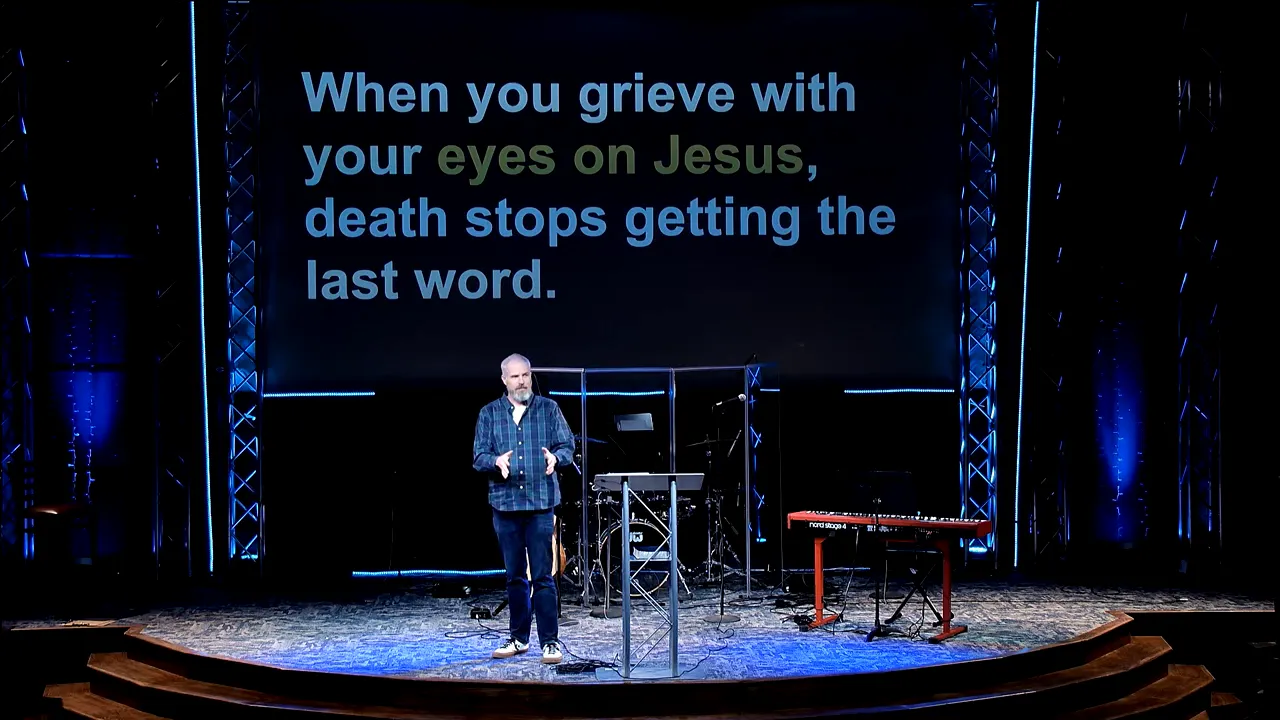
Hopeless grief says death gets the last word.
Hopeful grief says death is real, and painful, and terrible, but it is not ultimate because Jesus has already dealt with it.
That distinction matters more than we sometimes realize. If death wins in the end, then despair starts to seem logical. If death is the final authority, then love itself can begin to feel fragile and pointless. But if Jesus defeated death through his own resurrection, then death is no longer the ruler of the story.
This is why the resurrection is not a side doctrine or a seasonal church idea for Easter. It is the center of Christian hope. The resurrection of Jesus changes how we understand grief, mortality, courage, generosity, and the meaning of life itself.
Jesus said that the thief comes to steal, kill, and destroy, but he came that we may have life, and have it abundantly. That is the contrast. The enemy wants us to believe that death is final, that loss is ultimate, that despair is rational. Jesus says otherwise.
What hope looks like in real life
Sometimes the best way to understand spiritual truth is through a very human picture.
One of the most moving things you can see is the reaction of a child whose parent returns home after a long deployment. Maybe it is at a school assembly, in the middle of a classroom, at a birthday party, or during a school performance. Everyone else knows what is about to happen except the child.
Then the door opens.
Mom or dad walks in.
And the look on that child’s face says everything. Shock. Relief. Joy. Tears. The whole room disappears for a moment because the person they have been missing is suddenly standing right there.
If you want a human image of hope, that is one of the clearest I know. The face of someone realizing: You came back for me.
That is why Jesus’ words in John 14 are so powerful:
“There is more than enough room in my Father’s home... When everything is ready, I will come and get you, so that you will always be with me where I am.”
That is not a vague spiritual principle. That is a promise.
Jesus does not say, “I hope you can find your own way.” He does not say, “Good luck getting into heaven.” He says, I will come and get you.
This is the heart of Christian hope. We are not talking about a God who loses people. We are talking about a Savior who returns for his people. A Savior who prepares a place. A Savior who keeps his word. A Savior who does not abandon those he loves.
Trusting Jesus with more than your daily problems
It is easy to say, “I trust Jesus,” in a general, abstract, churchy kind of way.
It is harder when trust becomes specific.
Do you trust Jesus with your finances? That gets more uncomfortable.
Do you trust Jesus with your pain? That gets more personal.
Do you trust Jesus with the people you have lost? Now we are really getting somewhere.
And then the biggest question of all: Do you trust Jesus with your own life and eternity?
That is where trust stops being a philosophy and becomes an act of surrender.
Every one of us knows, whether we like to talk about it or not, that life on this earth has an expiration date. Every person is headed to the grave. That is not morbid. That is honest. We know it about everyone else, and if we are paying attention, we know it about ourselves too.
So what does it look like to trust Jesus there?
Sometimes it sounds like a prayer you can barely get out:
God, I do not understand why. I do not understand the timing. I do not understand the rest of the story. But I trust that this is in your hands.
That kind of trust does not erase pain. It relocates it. It places our pain in the hands of Christ rather than leaving it alone in the dark.
Why resurrection changes how we live right now
Once you believe that death does not win, life begins to look different too.
If death is final, then greed starts to make sense. Self-protection starts to make sense. Using people and climbing over them starts to make sense. Why not grab whatever you can if the grave swallows everything?
But if every person you meet is an eternal being, and if Jesus has truly defeated death, then your choices matter differently.
You can be generous with your time.
You can be generous with your resources.
You can love people deeply without cynicism.
You can invest in what lasts.
You can suffer without surrendering to despair.
The resurrection does not just comfort us about the future. It reshapes how we live in the present. It tells us that what we do now matters because the kingdom of God is real and coming in fullness.
The strange but important task of preparing for what comes next
There is an old pastoral way of describing ministry that is both sobering and clarifying. A pastor is an undershepherd. Jesus is the great shepherd. The pastor is simply helping guide people through this life toward what comes next.
That may sound severe at first, but it is actually full of grace. The work of spiritual care is not to distract people from mortality. It is to help them face it honestly and faithfully.
That means helping people prepare:
Emotionally, so they can process grief and fear
Mentally, so they can think clearly about truth
Spiritually, so they can anchor their lives in Christ
The goal is not to become experts who have every answer. The goal is to point people to the one who does.
That is true not just for pastors, but for the church as a whole. The church should not be a community that walks around acting superior, smug, or intellectually untouchable. We do not need to pretend we know every mystery of eternity. We do not.
But not having every answer does not mean we have no direction.
There is a big difference between saying, “I know everything,” and saying, “I know the one I trust.”
We do not have all the answers, but we know the Great Physician
Most of us have done that thing where we search our symptoms online and diagnose ourselves with six catastrophic conditions before lunch. Then we go to the doctor, explain our findings with great confidence, and are told we probably just need rest or aspirin.
That is humbling.
It is also a useful reminder. We are not the experts on ultimate things. Web searches are not the answer. Technology is not the answer. Human speculation is not the answer.
But Christians do believe we know the Great Physician. We know the one who has already faced death and come through the other side in victory. We know the one who has settled the outcome through the cross and the resurrection.
That is why the church exists at all. Not to posture. Not to perform superiority. Not to flex knowledge over confused people. But to remind one another, again and again, that Jesus died, Jesus rose, and because of that, there is hope.
What a hopeful church should look like
If that hope is really at the center, then it should shape the whole life of the church.
It should show up in worship. In prayer. In scripture reading. In the way a church serves children. In student ministry. In helping the homeless. In mission work. In daily acts of mercy. In conversations at work. In simple prayers spoken over hurting people.
All of that activity should orbit one central truth: Jesus has already done the decisive work.
He died.
He rose.
He is bringing his kingdom.
That means Christian hope is not escapism. It is not denial. It is not pretending life is not chaotic. It is the confidence that in the middle of a broken world, Jesus is still bringing redemption, still keeping his promises, still leading his people home.
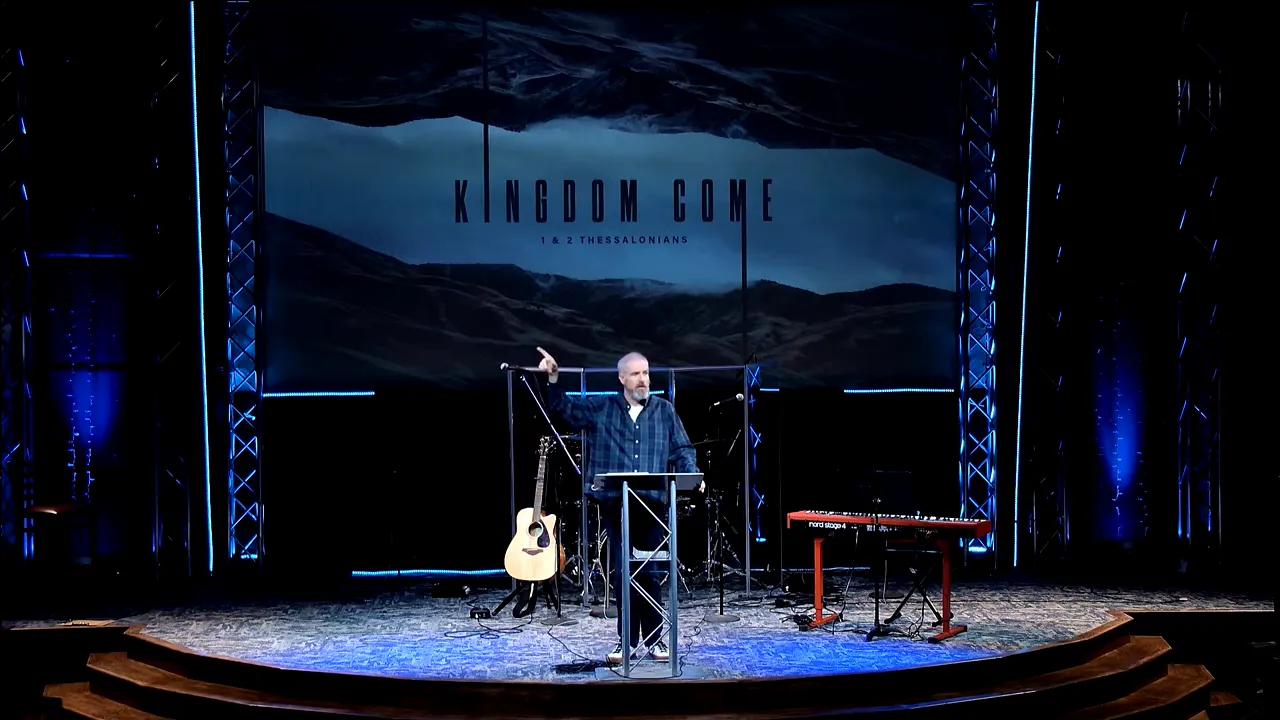
So how do you grieve with hope?
If you are carrying loss right now, this may be the most practical question.
Grieving with hope does not mean shutting off emotion. It means holding your emotion inside a larger story.
It means you can say all of the following at once:
I am devastated.
I miss them terribly.
I do not understand why this happened now.
I hate the ache of their absence.
And I still believe Jesus has not abandoned them or me.
That is Christian grief.
It is honest enough to cry and strong enough to hope.
It does not rush the process. It does not force fake cheerfulness. But it refuses to let death write the final sentence.
The invitation at the center of it all
At the center of this whole conversation is one invitation: trust Jesus.
Trust him with your grief.
Trust him with the people you miss.
Trust him with your unanswered questions.
Trust him with your fear of death.
Trust him with your own life.
That trust may begin quietly. It may not feel dramatic. It may be as simple as whispering, “Jesus, I trust you,” through tears. But that is not a small thing. That is the beginning of real hope.
Because if Jesus is risen, then death is defeated. If death is defeated, then grief is not hopeless. If grief is not hopeless, then love is not wasted. And if love is not wasted, then every sorrow can eventually be gathered into the redemption of God.
That is the promise Christians cling to. Not that loss is easy. Not that answers are always immediate. But that the resurrection counts, even now.
So yes, this life will end. We know that.
But the kingdom is coming.
And because of Jesus, we do not have to live or grieve as people with no hope.
Practical Help for When Anger Shows Up in Grief
Grief doesn’t only look like sadness—it can also stir up anger: anger at timing, anger at suffering, anger at questions that don’t have answers yet. If you find that your loss is producing frustration you don’t know what to do with, consider taking a step toward healing.
Here’s a helpful resource for turning anger into forgiveness and peace, grounded in biblical wisdom and practical practices.