
How Sacred Moments Happen in Ordinary Places
I love going to the mountains, especially around Granby and the western entrance to Rocky Mountain National Park. There is something about that air. It is crisp, clean, and cold in a way that does not feel like “just weather.” It hits you different.
Sometimes I am a little gaspy because of the elevation. But even when my body is reacting, there is still something deeper going on. I can sit quietly. I can watch the peaks for a while. I can enjoy the calm. And in those moments, I feel small in a good way. Creation feels large. And somehow, God feels closer.
That is not an uncommon experience. Hunters talk about nature helping them feel close to God. Golfers talk about the course like it is their place of focus. Marathon runners and ultra-marathoners describe that getting-out-of-yourself moment where life slows down and something spiritual becomes real. People talk about cathedrals, lakes, good books. Everyone seems to have a favorite “connection spot.”
But here is the tension I keep noticing. Those moments are powerful. So I savor them. And then, if I am not careful, I end up chasing them.
The Problem With Chasing Spiritual “Moments”
There is nothing wrong with enjoying a quiet view, a beautiful song, or a meaningful scripture. Those things can be gifts. The issue is when we treat them like the only times God shows up.
It starts to look like this: “I will get back close to God when I get everything perfect. When I get everything right. When I finally make it to church. When I fix this and that.” Then we search for the next spiritual “hit.” A moment. A song. A movement. A revival. A message we hear at just the right time.
It can become exhausting. Searching and searching and searching, always hoping the next moment will be the one where God feels near. And if God is only available on Sundays, or only in a specific building, or only through a certain voice, or only in a certain kind of music, then most of life becomes spiritually dry.
Like a person who is constantly thirsty.
That does not feel like God’s plan. Jesus came to give abundant life. Not just “access” to God once in a while, but a relationship that is steady enough to hold the rest of your days.
From Old Testament Moments to a New Testament Walk
One of the most important shifts across Scripture is how God is experienced. In the Hebrew Bible, people often experienced God through particular moments, particular places, and particular systems. God was present, yes, but the structure of life pointed toward “go here to meet God.”
In the New Testament, the opportunity changes. Instead of only moments that feel powerful, we are given a way to walk with God more regularly. Moment by moment. Day by day.
And that matters, because the connection is not limited by geography. The mountains are wonderful, but they are not the point. The point is God’s nearness.
Of course, it is easier to experience God when we clear out the junk. When we slow down. When we create space. That is why spiritual “places” tend to exist. But the real spiritual truth is that God is not confined to one location.
John 1 and the Word That “Dwelt” Among Us
If you want a clear picture of what God offers in Jesus, John 1 is one of the best places to start. John does not just describe events. It introduces you to the identity of Jesus in a deep, unforgettable way.
In the beginning, John says, the “Word already existed.” The Word was with God and the Word was God. Through this Word, God created everything. The Word gave life and brought light, and that light shines in darkness that cannot extinguish it.
John the Baptist appears in the story, but he is not the light. He is a witness pointing toward the true light, the One who gives light to everyone. And then John brings the central claim into focus:
“The word became human and made his home among us.”
In other translations you might see “dwelt” or “tabernacled.” Either way, the emphasis is on the idea of dwelling.
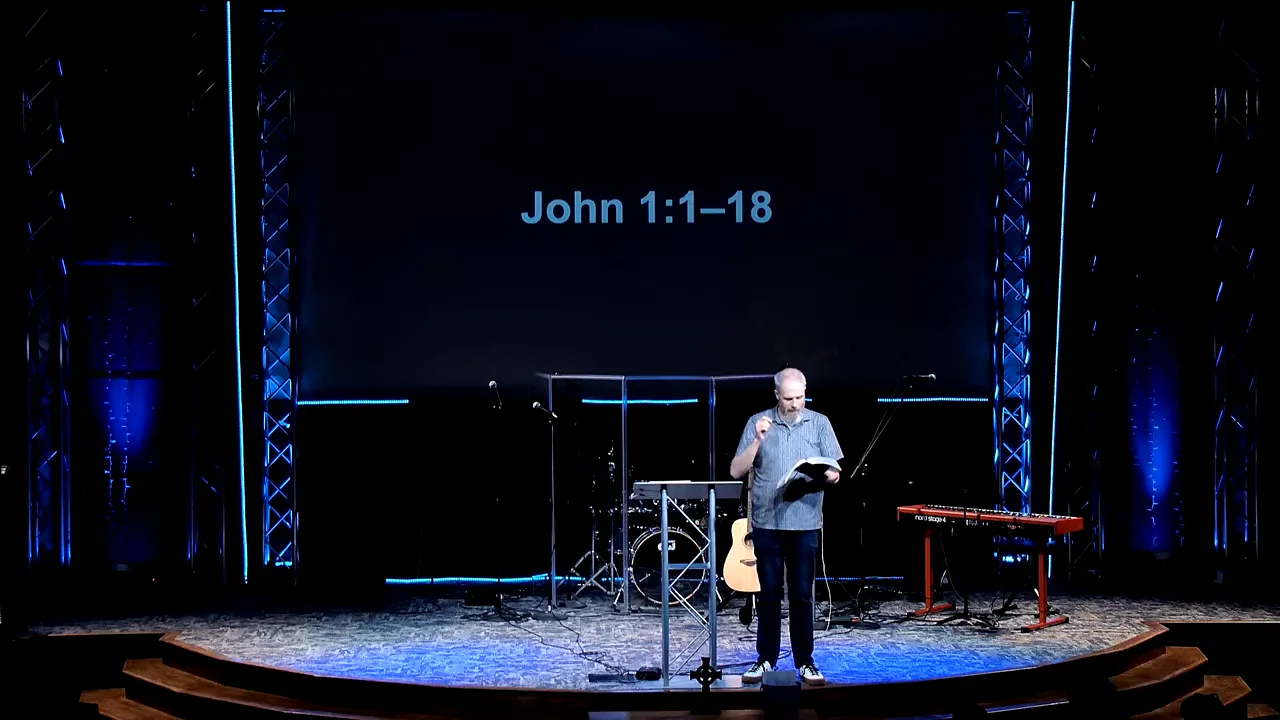
Jesus is not presented as a temporary visitor. He is presented as the One who comes close and stays. The “Word” does not just speak from a distance. The Word makes a home.
The Tabernacle: God’s Dwelling Place in the Wilderness
When John uses that language of dwelling, it invites you back into the story of the tabernacle.
In the Old Testament, a tabernacle was a dwelling place. Some translations call it a tent. But it was more than a campsite. It was where God’s presence was centered among God’s people.
When you read through Exodus and Leviticus, you find detailed instructions for building it. It was portable, because the people were traveling. But the tabernacle was still the central “meeting” point between heaven and earth.
Even Moses set it apart. In Exodus 33, Moses took a tent and placed it outside the camp, and it was called the tabernacle of meeting. People who sought the Lord went there.
The system worked like this:
- God’s presence was not simply everywhere in the same way people experience God in the New Testament.
- So the tabernacle became a place people went to meet with God.
- And within the structure, certain individuals had special access because the presence of God was at the center of the whole thing.
That concept feels foreign to us now, because we do not think in terms of “physical location equals access to God.” But in their world, it was normal to believe you had to go to the place where God was meeting them.
Jesus Changes Everything: The Tabernacle Becomes a Person
Here is where the New Testament lands with force. John is basically telling you that the tabernacle system finds its fulfillment in Jesus.
One theologian put it vividly in a way that sticks: the Word became flesh and tabernacled among us. The “dwelling amongst us” is the tabernacle idea. In other words, the place where God dwelt is no longer only a tent structure. God has come in the person of Jesus.
That means several things at once:
- Jesus is not a new creation. John makes it clear that the Word existed before Bethlehem. Jesus is eternal, and then the eternal Word entered human life.
- The “go to a place” model changes. You do not have to locate God by geography anymore.
- God’s nearness is personal. The dwelling is not only an object or a building. It is a Person who stays close.
God Is Not Hard to Find. We Harden Ourselves to Him.
There is a strange mix in my heart as I sit with this. On one hand, I feel comfort. On the other hand, I feel challenged.
If God is available everywhere, then we cannot pretend we “lost” the opportunity. We cannot escape the reality that God is near. It is both beautiful and a little unsettling.
As the Spirit of God dwells with believers, you cannot hide. Not in the way we might hide from friends. God knows where you are.
But here is the reason that is not just fear. The beauty is that you are never alone.
God wants relationship with you. And because of Jesus, the conditions for connection are no longer dependent on your ability to reach the right place or the right system.
Practical Holiness: Talking to God in the Middle of Real Life
What does this look like day to day? It looks like talking to God in the middle of ordinary routines.
You can talk to God after this meeting is over. Five minutes later. Late at night. Right when you cannot sleep because worry keeps climbing into your thoughts. In a hospital room where you are alone. At work with noise around you and people talking. On a mountain by yourself.
There is nowhere God is not. And because the Spirit travels with you, you do not have to go somewhere specific to find God’s presence.
That is a big deal when you realize how people used to experience access to communication and connection.
I remember when phones did not live in your pocket. In college, I did not have a cell phone. I had a pager. People could send a message to the number, and then you would have to drive to a place to call back. In bad weather, you would use a car phone that came with a cord and awkward setup. I even remember waiting for someone to get off the phone once, for twenty minutes.
Today, connection feels instant. Even beyond that, we now talk from places where service normally dies because satellite technology makes communication possible.
That is a silly illustration, but it helps me feel the weight of what Jesus changes spiritually. Because in the old way, you go to a place. In the new way, the Spirit of God is with you, 24-7, because of Jesus.
“Come Follow Me”: The Invitation Still Echoes
So what should you do with this? John 1 points toward Jesus as the Word who made his home among us. But the invitation does not stay theoretical. It still calls for a response.
When Jesus called fishermen, he said, “Come follow me.” They did not wait until they had everything figured out. They dropped their nets and started following.
That invitation echoes across time. You can follow Jesus now. You can start a path toward healing. Toward knowing your Creator in the way people often hunger for but assume they must “earn” by getting somewhere spiritually right first.
If you have never said yes to Jesus, this is your permission to begin. If you have followed Him before and drifted, this is a chance to come back.
The Mobile Tabernacle: Following Jesus Includes Participating
There is one more layer to this story that keeps the Christian life from becoming only “private spirituality.” The tabernacle was a dwelling place where heaven and earth met. Jesus fulfills that. But Jesus does not only leave you with personal access to God. He turns you into part of God’s presence in the world.
N.T. Wright describes it this way: Jesus himself is the new temple at the heart of the new creation. Like the wilderness tabernacle, this temple is on the move.
As God’s people go out in the Spirit, they become the dwelling of God in each place. Not because they manufacture spiritual power, but because God’s presence lives within them.
So yes, you can talk to God 24-7. That is beautiful. But you also begin living as a mobile tabernacle. You take God into work, into classrooms, into neighborhoods.
And that leads to a cross-shaped life and work.
In plain terms, following Jesus is not just watching what God does from the sidelines. You are invited to get on the field and play. You are invited to participate in what God is doing right now, where heaven meets earth.
Jesus Rescues and Recruits Friends
It is tempting to think God calls people only to observe or comply. But Jesus’ invitation is more personal than that. He chooses to work through you.
When He told the fishermen to come follow Him, He was not saying, “Follow me around for no purpose.” He was forming them for mission. He was making them fishers of people.
The good news they would carry is not vague inspiration. It is a message with content:
- God has reconciled all things.
- He has brought people back to Himself.
- The Creator wants to know you, loves you, and cares about you.
That is not just information to store. It is a rescue to experience and a friendship to share.
What to Do Next
If the spiritual life has felt like a series of brief “hits,” let John 1 reset your expectations. Jesus is not primarily a temporary moment where you feel close to God. Jesus is the dwelling of God with humanity. And that changes the pattern of your days.
Here are a few next steps you can take immediately:
- Read John with the key word in mind: dwelt. Notice how often the theme of nearness shows up.
- Talk to God today, not only when life feels spiritual. Pray in a normal moment, not only a special one.
- Choose one place to “take God with you.” Work, school, your neighborhood, or your home. Let presence become practice.
- Follow Jesus as an invitation, not a project. You do not have to be perfectly set up before you begin.
God’s offer is not a limited menu of occasional moments. It is a real relationship, a steady nearness, and a life that becomes part of heaven meeting earth.