
Moses, Jesus & Trust: How Living Authority Reframes Moral Guidance
Why the Oregon Trail still matters
As a kid I remember playing a brutally difficult board game where the goal was to make your way across the United States. The rules were harsh, chances were slim, and the game tracked how many people died along the way. It was a little funny in hindsight, but the memory stuck because the game modeled something ancient and honest: journeys are risky, and we need guidance to survive them.
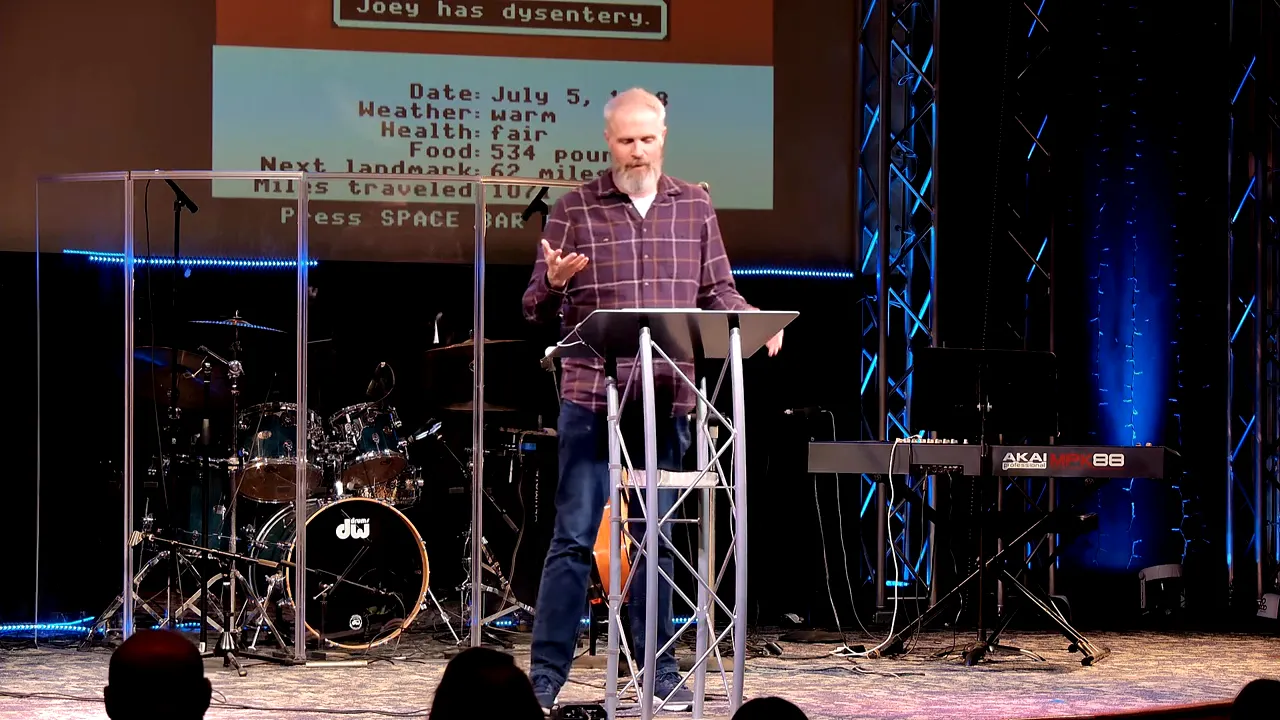
That childhood game is a useful, imperfect picture of a much deeper human reality. We like to think of ourselves as independent, as self-made. Western culture often celebrates rugged individualism and the idea that truth is whatever you decide for yourself. But when it comes to moral direction, deep meaning, and navigating the real dangers of life, independent choices alone do not always lead to flourishing.
The problem with following ourselves
The heart is persuasive, but not always trustworthy. As one simple line puts it: our hearts are not a good idea. We follow someone or something. If not a philosopher, politician, or ideology, we default to our own instincts. That instinct can be sincere, but sincerity is not proof of correctness.
Historically, people have placed trust in leaders whose authority was rooted in something verifiable. Moses, for example, gained trust because his words were anchored to history and signs. His authority was proven: he’d led people from slavery and had a track record that matched his claims.
Authority redefined: Moses contrasted with Jesus
Moses was a mediator of the law. He came with commands, structure, and a story of rescue out of Egypt. His authority was formative for Israel. But there is a crucial transition when Jesus arrives: he introduces a different way of authority — not merely lawgiving, but embodiment of grace and living teaching.
When Jesus taught, people were captivated. The crowd noticed something different. He didn’t just repeat prior rules; he showed a heart and an authority that drew people in. He showed that rescue and moral transformation are not primarily about systems we can control, but about the presence of a person who invites us into trust and transformation.
That shift from law to living authority matters because it reframes the reason we follow. Moses asked for trust based on deeds and historical linkages. Jesus invites trust based on who he is and how he embodies grace — a kind of authority that changes the imagination of what God’s rescue looks like.
Symbols that help us see the shift
Some images stick with us because they compress reality into a single, memorable moment. One such image is the burning bush — God encountering Moses in a way that demanded attention. Another image, used to illustrate the New Testament shift, is the person: God in flesh, moving among people.
Symbolism helps. The burning bush says: God calls us out of our normal routine. The embodied Jesus says: God moves into our routine. Both images point to authority, but they highlight different ways God interacts with humanity: one that announces and one that dwells.
The moon and the sun: a simple, honest metaphor
One of the clearest metaphors for understanding identity and authority is the moon. On certain morning walks, if you catch the moon low on the horizon while the world is waking up, you notice it reflects light rather than making its own. The moon is beautiful, but its light is derivative — it borrows from the sun.
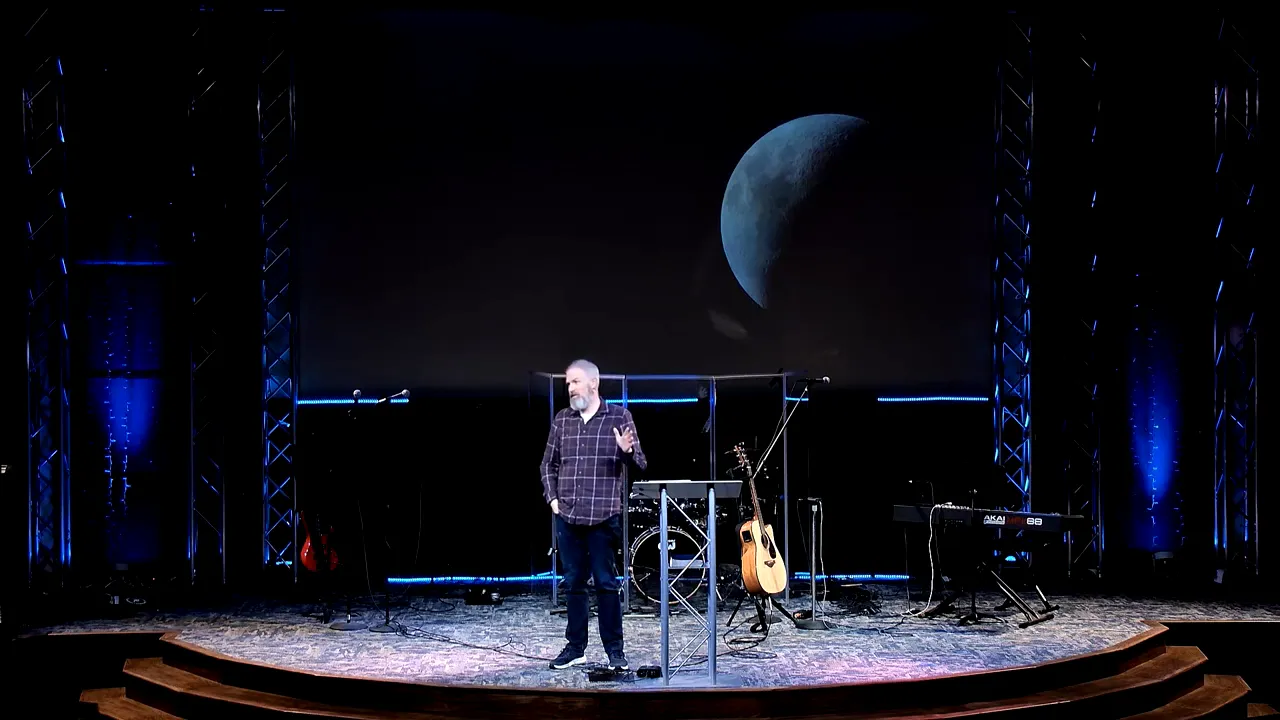
The moon is not perfect or complete; it is a witness to a greater source of light. If Jesus is the sun, then the things and people that point to him are like the moon. They reflect the light, but they are not the source.
That image invites humility. We can be reflective instruments — channels that show something of God — without pretending to be the origin. Churches, leaders, and traditions can mirror truth, but their point is ultimately to draw attention away from themselves and toward the source.
Scientifically, the moon’s phases and imperfections are obvious. Metaphorically, the point is spiritual: the light that warms and sustains comes from somewhere else. Recognizing that helps us re-orient from self-reliance to dependence.
Generations, telephone, and the risk of distortion
Another image to hold is the childhood game where you whisper a sentence around a circle and watch it mutate into nonsense by the end. The game shows how stories and teachings can be unintentionally distorted as they pass through human mouths and memories.
That’s one reason authority matters. Not because we want to be controlled, but because we want to connect to something real and stable that resists distortion. Moses provided an anchor. Jesus provided a living anchor who not only taught truth but also embodied a pattern that could be recognized and followed across generations.
Yet even with a reliable anchor, the human tendency toward error remains. That’s why relationship with the living Lord matters more than merely repeating phrases. The goal is not perfect copying; the goal is transformation that aligns the heart with the source of truth.
When trust is tested: a story about fleeing and faith
There are moments when trust stops being an abstract idea and becomes a life-or-death practice. A personal memory illustrates this vividly: taking a small group to a region where local authorities were hostile, learning to travel with a network that helped us stay safe, and relying on God in ways that felt raw and immediate.
In those moments, small habits mattered — a prayer whispered seeing the moon, a quick breath of recognition. These were not dramatic declarations but simple acts of trust that shaped the group’s bravery and commitment. When systems fail, simple, practiced trust becomes a lifeline.
Authority, trust, and everyday practice
The theological point is straightforward and practical at the same time. There is a difference between trusting someone because of their resume and trusting someone because you know their character. The first can be brittle; the second is resilient.
Following a person of authority who embodies the truth you seek reshapes how you live day to day. It does not eliminate difficulty, but it redirects how you respond. Instead of trying to manufacture strength, you learn to step into trust.
Practical ways to live out trust
- Short, honest prayer: A simple phrase like, “Jesus, I trust you,” repeated often, becomes a posture more than a petition.
- Look for small moments: The opportunities to rely on God are not always big. A decision at work, a tense conversation, an early walk — these are places to practice faith.
- Stay teachable: Instead of thinking independence equals maturity, recognize that maturity often looks like receptivity to correction and formation.
- Pass on what you know: Teach younger or newer believers not only facts but the habit of trust. Show them how you pray, how you wait, how you reorient toward the source.
- Be a faithful reflector: Like the moon, let your life reflect the light you have received without pretending to be the origin.
Why simple habits matter more than spectacular moments
People often chase big spiritual experiences. Those can be meaningful, but they are rare. What shapes long-term character are small, repeatable habits that center us on truth. The habit of a short prayer, the discipline of an early walk to notice creation, the willingness to choose a faithful friend over a quick fix — these are the disciplines that endure.
The simple prayer mentioned earlier captures this: a brief, earnest surrender repeated in the moment of decision. It is not eloquence that changes the world; it is willingness to yield that reshapes the heart.
Authority without arrogance
There is a fine line between healthy leadership and idolatrous leadership. True authority should point away from itself. It should serve. It should invite others into relationship with the source of life.
When authority becomes an idol — when we begin to follow rules, charismatic leaders, or cultural trends instead of the source — the result is distortion. The remedy is humility: leaders who model dependence and communities that cultivate discernment.
How to choose who to follow
Choosing a guide requires a few simple checks:
- Does their life match their words? Integrity matters. Moses gained credibility because his life matched his claims; so should those we follow today.
- Do they point you to a source beyond themselves? A good leader directs attention away from self and toward God, not toward applause.
- Are their teachings consistent with grace and truth? Authority that is purely legalistic or purely permissive does not reflect the fullness of the gospel.
- Is there a pattern of transformation? Look for lives transformed by what is taught, not just clever rhetoric.
Passing faith across generations
Transmitting faith is not copying words into ears; it is forming hearts to trust. That means parents, mentors, and communities need to invest in the habits and practices that create spiritual muscle memory. Stories matter, but the rhythm of prayer, the practice of confession, the habit of waiting for God — these create a foundation that resists the "telephone effect."
Teach children and younger believers to be both reflective and rooted: reflective like the moon that shows what it has received, rooted like the sun that gives life.
One sentence that changes the day
There’s a practical, almost shockingly simple discipline you can adopt today: when stress or fear comes, say a short, clear sentence like “Jesus, I trust you”. Say it aloud if you must. Repeat it while you drive, while you walk, while you wait for news. It is not a magic formula, but it is a posture that shifts your default from self-reliance to reliance on a living authority.
Conclusion: follow the light, not the illusion of independence
The story of Moses, the image of the burning bush, the metaphor of moonlight — they all point to a single invitation: reorient your trust. Independence feels noble, but it can be shallow. Choosing a trustworthy authority like Jesus is not about surrendering freedom; it is about discovering the source of freedom.
Practice small acts of trust. Rehearse the short prayers. Teach the next generation to be reflectors and followers of the true light. Do this not out of fear of being wrong, but out of love for a source that changes hearts and reshapes lives.
Key takeaways
- Authority matters: Look for leaders whose lives match their words and who point to the source of truth.
- Trust is practical: Simple habits like short prayers reshape responses to fear and stress.
- Be a reflector: Like the moon, let your life reflect the light you have received.
- Pass on formation: Teach practices, not just facts, so faith survives generations intact.
"Our hearts are not a good idea."