
Finding Rest and Hope When the World Feels Chaotic
Let me ask a question that feels a lot more urgent than it did even a few years ago: how do you know what’s real anymore?
That used to sound like a philosophy class question. Now it sounds like Tuesday.
We live in a world of AI deepfakes, scam emails, fake invoices, voice impersonation, phishing texts, and carefully engineered panic. You can get a message that looks official, sounds official, and feels official, and still be completely false. It is now possible to look right at something and still not be sure whether it came from a human being or a machine.
That is exhausting.
It is not just a technology problem. It is a trust problem. It is a discernment problem. It is a spiritual problem. And that is why this issue matters for Christians, not just for cybersecurity professionals.
I was reminded of how vulnerable we all are during one of the least glamorous parts of pastoral life: an insurance review. People sometimes imagine pastors spending all week in deep prayer and study, and yes, there is some of that. But there is also the thrilling world of policy updates and risk assessments.
During one of those conversations, an insurance agent brought up how many new scams now target churches specifically. He told a story about a pastor in Oklahoma who was traveling by plane. During that window when he had boarded and had no cell service, someone called the church pretending to be him. The caller said he had been arrested and urgently needed $1,200 wired to him.
The church secretary believed it. She sent the money. She was trying to help. She was responding to what sounded real.
Then the pastor landed, turned his phone back on, and got a flood of messages asking whether he was out of jail.
That story lands because it is believable. That is the point. Deception works when it borrows the shape of truth.
The problem is older than technology
It is tempting to think this crisis of truth is brand new. The tools are new, absolutely. AI-generated video is new. Digital voice cloning is new. Deepfake scams are new. But the deeper issue is ancient.
Human beings have always struggled to tell the difference between what merely appears powerful and what is actually true. We have always been vulnerable to panic, manipulation, false certainty, and the desire for someone to come along and explain everything.
That is part of what was happening in the church at Thessalonica.
In 2 Thessalonians, Paul is writing to a church that is rattled. They are anxious about the return of Jesus. They are hearing claims, predictions, and spiritual reports. Some people are saying the day of the Lord has already begun. Others are stirring up fear. The church is trying to figure out what to believe, and Paul steps in not to hand them a date on a calendar, but to give them something better.
He gives them patterns.
What an old video game can teach us about discernment
One of the strangest but most helpful ways to think about this came from an old arcade-era mindset. If you grew up playing classic video games like Mike Tyson’s Punch-Out!!, you know the deal. Those games did not have save points. They did not really care about your feelings. If you wanted to win, you had to learn patterns.
You watched for little tells. A certain movement. A pause. A shift. A repeated rhythm that told you when to attack and when not to. The best players were not guessing. They were noticing.
That is still true to a surprising degree. Even recently, people have found new hidden patterns in games that have been played for decades. Imagine that. A game from the mid-1980s still revealing clues because people kept paying close attention.
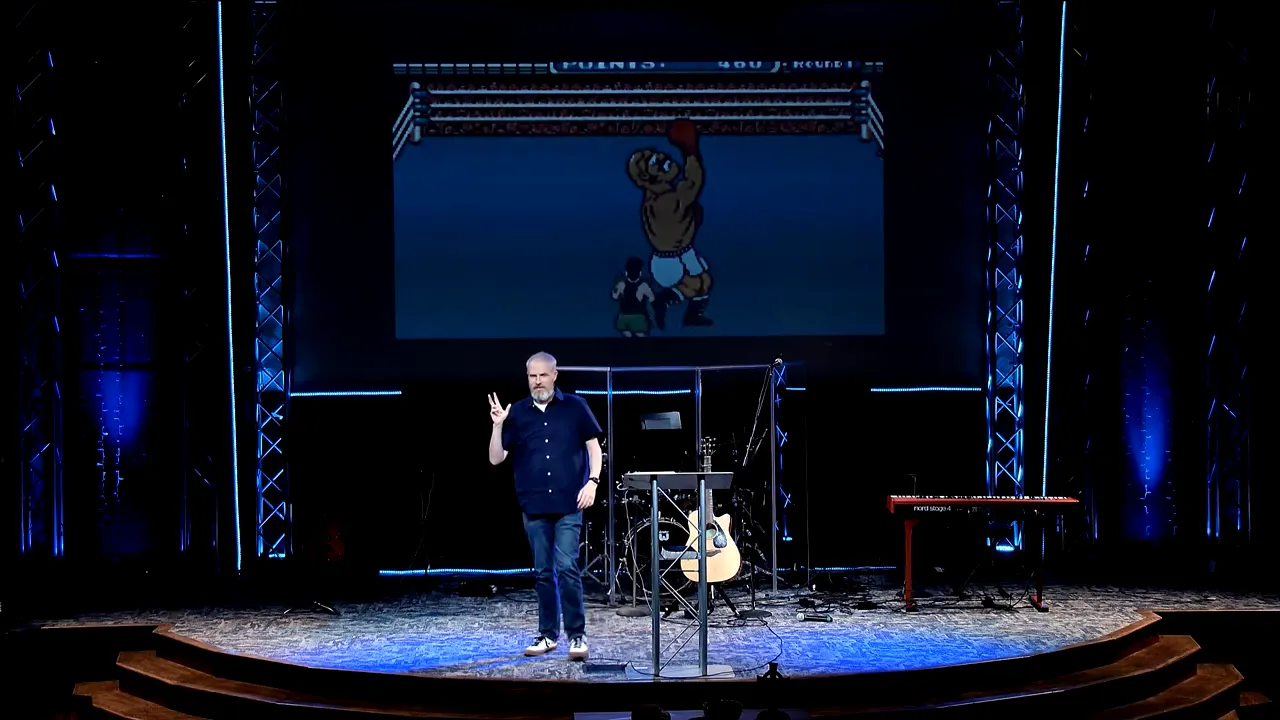
That image helps make sense of what Paul is doing in 2 Thessalonians. He is not giving the church a secret decoder ring. He is not saying, “Here is the exact date Jesus returns, circle it and relax.” He is saying, “Pay attention. Learn the patterns. Know what to watch for.”
That matters because in every age there are people claiming special knowledge:
-
People announcing that the sky is falling
-
People claiming fresh revelation that nobody else has
-
People saying they alone know how the end will unfold
-
People turning fear into influence, sales, power, or control
Paul’s counsel is incredibly relevant for a world drowning in hot takes and conspiracy-driven spirituality: do not be easily shaken or alarmed.
What Paul actually says in 2 Thessalonians 2
In 2 Thessalonians 2, Paul tells the church not to be fooled by claims that the day of the Lord has already begun. Even if someone says they had a spiritual vision. Even if someone claims a revelation. Even if a letter seems authoritative. The basic instruction is simple: do not believe every dramatic claim just because it sounds spiritual.
Then Paul points to a pattern that must precede the return of Christ. He says there will be a great rebellion against God, and the “man of lawlessness” will be revealed.
That phrase has generated a lot of speculation over the centuries, and people have repeatedly tried to attach it to a current political villain, cultural enemy, or global figure. But Paul’s description is more specific than our favorite theories. This figure is not simply any bad ruler. He is someone who exalts himself, opposes God, and seeks to set himself in God’s place.
That is why the category of “antichrist” matters here. Scripture speaks not only of one climactic opponent, but of many antichrists. History has seen many leaders, systems, and movements that fit the pattern of anti-Christ power. They may not fulfill this prophecy in its final form, but they certainly rhyme with it.
Think of the pattern:
-
A person or empire rises to power
-
It demands ultimate loyalty
-
It tells people to trust it instead of God
-
It presents itself as the answer to everything
-
It turns deception into devotion
That pattern has shown up again and again.
Lawlessness is already at work
One of the most important lines in the passage is Paul’s statement that this lawlessness is already at work. That means evil is not only a future event to decode. It is an active present reality to discern.
The church in Thessalonica was not wrong to sense that something was happening. They were wrong to assume every disturbance meant the end had arrived. Paul slows them down. He tells them that dark spiritual forces are at work, yes, but that does not mean they should panic or give themselves to speculation.
This is where many people still get off track. We often want certainty where God has given us trust. We want timelines when God has given us faithfulness. We want a chart when God has given us a calling.
Paul does not hand the church a mathematical formula. He gives them a posture.
Be alert. Be discerning. Do not be gullible. Do not be shaken. Do not surrender truth just because deception comes dressed like power.
The danger of counterfeit power
Paul goes even further. He says this figure will come with counterfeit power, signs, and miracles. That language matters because it means deception does not always look obviously absurd. Sometimes it looks impressive. Sometimes it looks successful. Sometimes it looks supernatural.
That is always one of the great temptations. We assume that power proves truth. It does not.
In fact, one of the clearest biblical warnings is that falsehood often borrows the appearance of legitimacy. It may wear religious clothing. It may use spiritual language. It may seem to produce results. But if it leads people away from the truth of God and toward devotion to something else, it is counterfeit.
Paul says people are deceived because they refuse to love the truth. That is a sobering line. Deception is not only an intellectual failure. It can also be a moral one. Sometimes people believe lies because the lies are useful. The lies flatter them. The lies promise control. The lies justify what they already wanted.
That helps make sense of the difficult passage where Paul says God gives them over to delusion. The idea is not that God randomly tricks innocent people. It is that people persistently reject truth, cling to evil, and God gives them over to the path they have chosen. It is similar to Pharaoh hardening his heart and then being hardened in it.
The choice becomes the judgment.
How to recognize the pattern in real life
So what does this look like in practical terms?
It means whenever a person, movement, or system says, “Trust me absolutely. I will save you. I will fix everything. Do not trust God. Do not question me,” alarms should go off.
That is the pattern.
And this is not limited to one nation, one ideology, or one era. Human beings across history have built kingdoms that try to take God’s place. Caesar did it. Dictators did it. Totalitarian systems did it. Personality cults still do it.
North Korea offers one of the clearest contemporary pictures of this. The ruling dynasty has been elevated into something like a religious object. The state has sought to crowd out other forms of worship and create total devotion to its leader. To those on the outside, the propaganda can seem absurd. But before laughing too quickly, it is worth remembering something humbling: the people living there are humans just like us.
We are not magically immune to false kingdoms.
We are just as capable of giving our imagination, fear, loyalty, and hope to something other than God. We are just as susceptible to being swept up by systems that promise salvation in exchange for total allegiance.
That is why discernment matters. The call is not merely to identify “those people over there” who believe strange things. The call is to ask hard questions of our own habits, our own allegiances, and our own fears.
God remains sovereign over every empire
Here is where the weight begins to lift.
Paul is not writing to produce anxiety. He is writing to produce steadiness. Behind all his warnings is a much larger truth: God remains sovereign.
No empire outmaneuvers him. No false messiah surprises him. No political system dethrones him. No counterfeit miracle threatens his final victory.
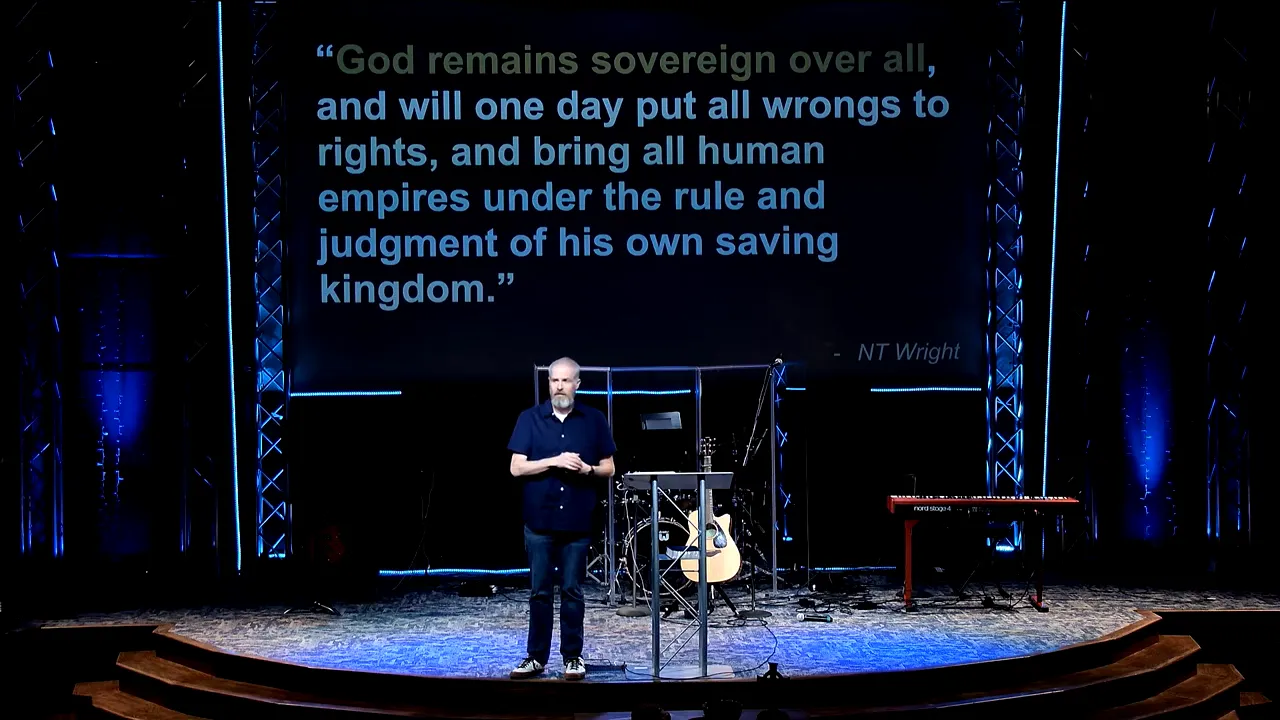
As N.T. Wright puts it, God remains sovereign over all, and one day he will put all wrongs to rights and bring all human empires under the rule and judgment of his saving kingdom. That is the Christian hope. History is not spiraling beyond God’s reach. It is moving toward his justice.
This means Christians do not have to live in a state of frantic end-times obsession. We can be awake without being hysterical. We can be discerning without being paranoid. We can take evil seriously without acting as if evil gets the last word.
Jesus does.
The battle has already been won
This is where Easter changes everything.
The resurrection means the decisive battle is not still up for grabs. Jesus has already conquered death. The tomb is empty. The victory is already secured.
That does not mean the world is not painful. It does not mean deception is not active. It does not mean there is no spiritual conflict. It means the final outcome is not in doubt.
That is a very different way to live.
You do not have to save the world. You do not have to crack every code. You do not have to outsmart every false prophet. You are not being asked to finish a battle Jesus somehow left unfinished.
Your calling is to trust the One who already won.
That truth reframes the entire “in-between” period we are living in. We live after the resurrection and before the return of Christ. The kingdom has been inaugurated, but not yet fully consummated. We still work. We still pray. We still resist evil. We still point people toward Jesus. But we do all of it from victory, not for victory.
Why Sabbath is a deeply practical act of faith
This is where the message gets wonderfully practical.
If all of this sounds big and theological, Paul’s teaching eventually lands in a very ordinary place: the pattern of rest.
God built rhythm into creation itself. Six days of work and one day of rest. Striving and stopping. Labor and trust. That pattern is not random. It is one of the oldest spiritual lessons in Scripture.
Sabbath reminds us of something we forget constantly: there is a God, and I am not him.
If you never stop, if you work seven days a week, if your mind is always racing and your hands are always moving, you begin to believe everything depends on you. Rest interrupts that illusion.
Sabbath says:
-
The world keeps spinning while I sleep
-
God is still in charge when I am not productive
-
My worth is not measured by output
-
The kingdom does not collapse because I paused
That is why rest is not laziness. It is resistance. It resists the lie that we are machines. It resists the lie that empire, productivity, and pressure are ultimate. It resists the lie that salvation comes through constant striving.
In that sense, Sabbath is a weekly declaration of trust.
Sabbath is rehearsal for the ending we’ve been promised
There is an even deeper beauty to this. Sabbath is not just a break. It is a rehearsal.
Every time we stop, worship, pray, gather, and rest, we are practicing the ending of the story. We are acting out, in miniature, what it means to live as though the King has already won because he has.
When the church gathers to sing, pray, read Scripture, and pause from the frenzy of the week, it is not just running a religious program. It is remembering reality. It is resetting the heart. It is reorienting the imagination toward the kingdom that actually lasts.
Sabbath becomes a weekly protest against chaos and a weekly confession of hope.
It says:
-
Work is not ultimate
-
Fear is not ultimate
-
The latest scam, headline, crisis, or empire is not ultimate
-
Jesus Christ is Lord
That is why Sabbath is not optional fluff for the spiritually elite. It is formation. It trains us to rest in God rather than panic in the world.
How to live when the world feels unstable
If the world feels noisy, manipulative, and unstable right now, the answer is not to become cynical and trust nothing. It is also not to become gullible and trust everything. The answer is to become rooted.
Rooted in Scripture. Rooted in the character of God. Rooted in the finished work of Jesus. Rooted in patterns of truth that help expose counterfeit kingdoms.
That means learning to ask:
-
Does this lead me toward trust in God or away from him?
-
Is this asking for healthy discernment or blind allegiance?
-
Does this produce humility, faithfulness, and truth, or fear, obsession, and control?
-
Is this the kingdom of God, or just another kingdom trying to wear God’s clothes?
The call is not to figure out every secret detail of history. The call is to remain faithful in the middle of it.
And faithfulness often looks quieter than we expect. It looks like refusing panic. It looks like rejecting false saviors. It looks like worship. It looks like gathering with God’s people. It looks like rest. It looks like trust.
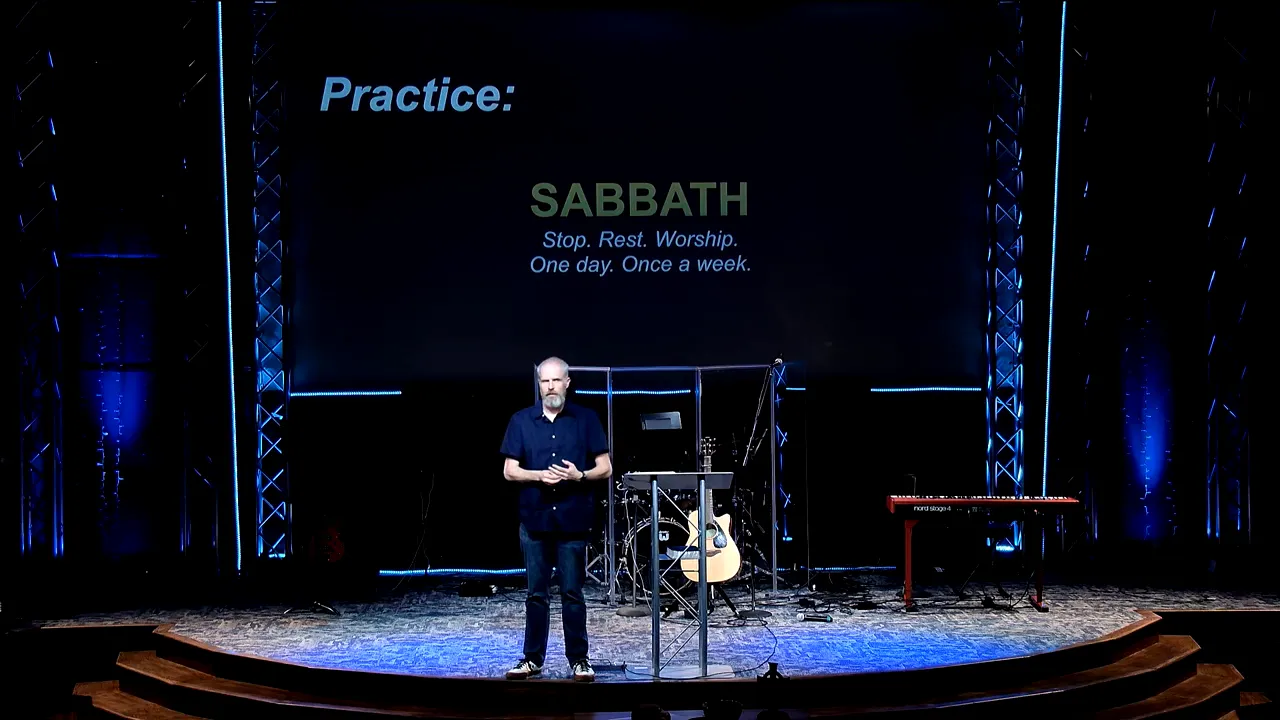
If you want a practical next step, reclaim a rhythm of Sabbath. Stop. Rest. Worship. Let your body and your calendar preach the truth your soul keeps forgetting.
And if you are looking for a church home or a place to connect, you can find more through Coffee Creek Church Center.
Rest like the King has already won
The world will keep producing counterfeits. There will be more noise, more manipulation, more fear, more confusion, and more people trying to climb into God’s chair.
But none of them get the throne.
Jesus has already defeated death. God is not wringing his hands over history. The kingdom of God is not under threat from human deception. And the people of God are not called to panic, but to endure in hope.
So when the world feels chaotic, remember the pattern. Learn the signs. Refuse the counterfeit. Take your rest seriously. Practice Sabbath like a rehearsal for the restored world that is coming.
Rest like the King has already won, because he did.